Discover the intricacies of data marketplaces and how you can create yours in 2026.
Data Analytics and Business Intelligence
How to Build Your Own Data Marketplace in 2026?
Discover the intricacies of data marketplaces and how you can create yours in 2026.
Table of contents
Table of contents
Introduction
Understanding Data Marketplaces
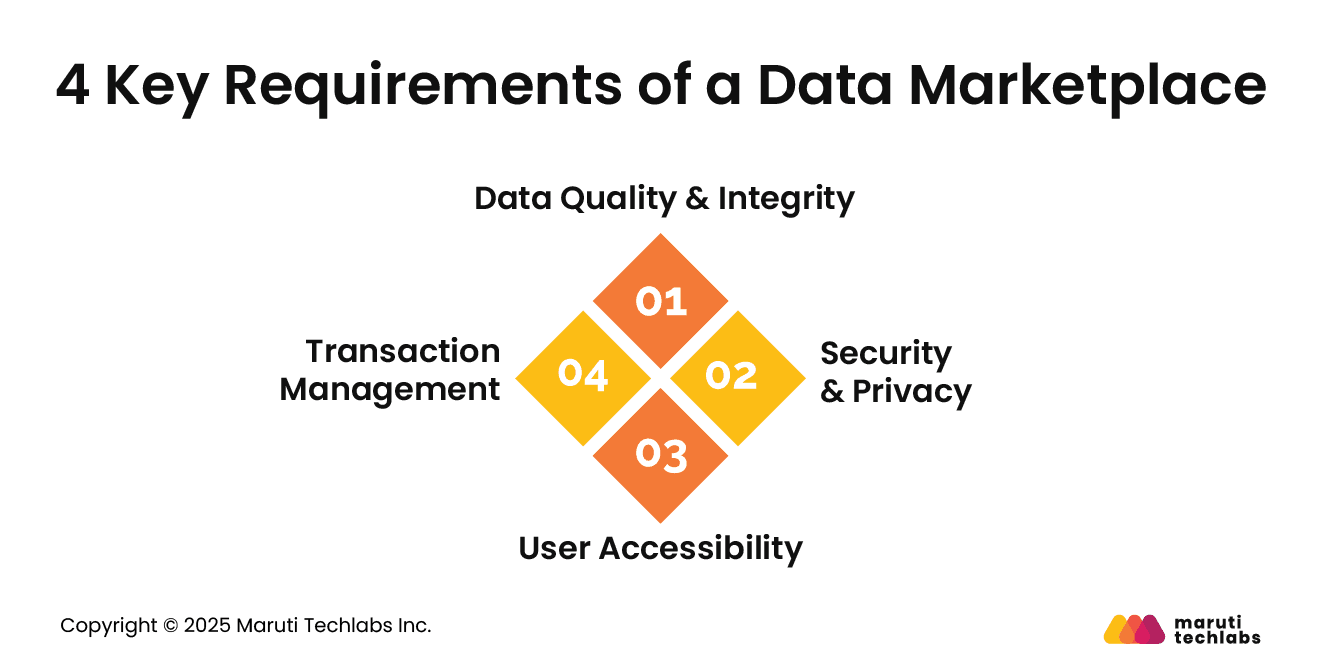
4 Key Requirements of a Data Marketplace
How does a Data Marketplace Work?
4 Key Benefits of Building Your Own Data Marketplace
Data Marketplace: Challenges & Security Considerations
Tools and Platforms to Consider When Developing a Data Marketplace in 2026
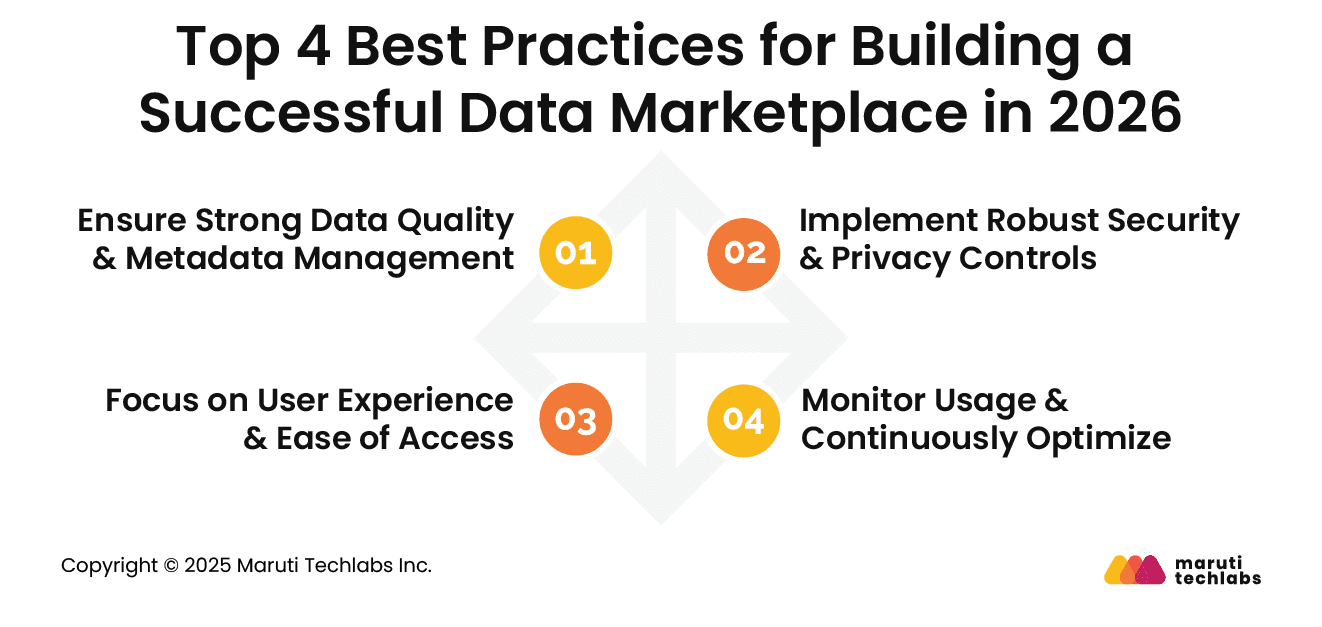
Top 4 Best Practices for Building a Successful Data Marketplace in 2026
5 Popular Data Marketplaces You Should Know
Conclusion
How MTL Can Help?
Frequently Asked Questions
Introduction
Data has become a distinguishing factor for businesses' success today. Never before has such importance been placed on valuable and actionable insights. This necessity has given rise to groundbreaking solutions like Data Marketplaces.
A report from Grand View Research suggests that the global data marketplace platform market size was estimated at USD 1.49 billion in 2024 and is projected to reach USD 5.73 billion by 2030, growing at a CAGR of 25.2% from 2025 to 2030.
As everything in the world observes a digital shift, so has data trading, and data marketplaces are a classic example of the same. But what are data marketplaces, how do they work, and more importantly, how can you create your data marketplace?
This blog answers all these questions and more, including the value it offers, key requirements, and challenges.
Understanding Data Marketplaces
What is a Data Marketplace?
“A data marketplace is a platform that makes it convenient for data providers and consumers to buy and sell trusted datasets. Its advantage is that it simplifies discovering and accessing relevant data.”
It works like any other online marketplace; however, its primary purpose is exchanging data rather than products or services. This model enhances accessibility to varied data sources while facilitating a more transparent exchange of information.
What is the Value of a Data Marketplace?
Collecting reliable data is a real challenge. Offering self-service access to data is one way to do this. However, not everyone is tech-savvy, so this process must be intuitive and secure.
Businesses should have a robust data governance framework to protect critical data, ensure regulatory compliance, and maintain quality and accuracy. The framework should also prevent unauthorized access with stringent access controls, encryption, and monitoring mechanisms.
This assures organizations that data is only shared with authorized users who have a real business need to access it. Introducing automation to data sharing with a data marketplace can help overcome this distrust. In addition, it eliminates the hassle of manual data delivery, removes collaboration barriers, and decreases costs and inefficiencies.
4 Key Requirements of a Data Marketplace
A data marketplace must adhere to four key requirements to be successful, functional, and ethical. Let’s observe these requirements in brief.
1. Data Quality & Integrity
The data available in the marketplace should always be highly refined, accurate, and usable. This can be done by placing validation checks and quality assurance processes.
The data should follow standardized formats and schemas to ensure compatibility and ease of use.
2. Security & Privacy
To shield confidential data from unauthorized access and breaches, adequate security protocols must be applied.
The marketplace must observe global privacy laws and regulations, like GDPR, to ensure the data is handled compliantly.
3. User Accessibility
It’s critical to have an intuitive user interface so users can search and access the necessary data effortlessly.
It’s important that the platform has advanced search functionality and discovery tools to introduce specificity to searching datasets.
4. Transaction Management
It’s vital to have secure systems that facilitate transactions like payment and data licensing.
Detailed data licensing agreements that mention usage rights, restrictions, and limitations for providers and consumers.
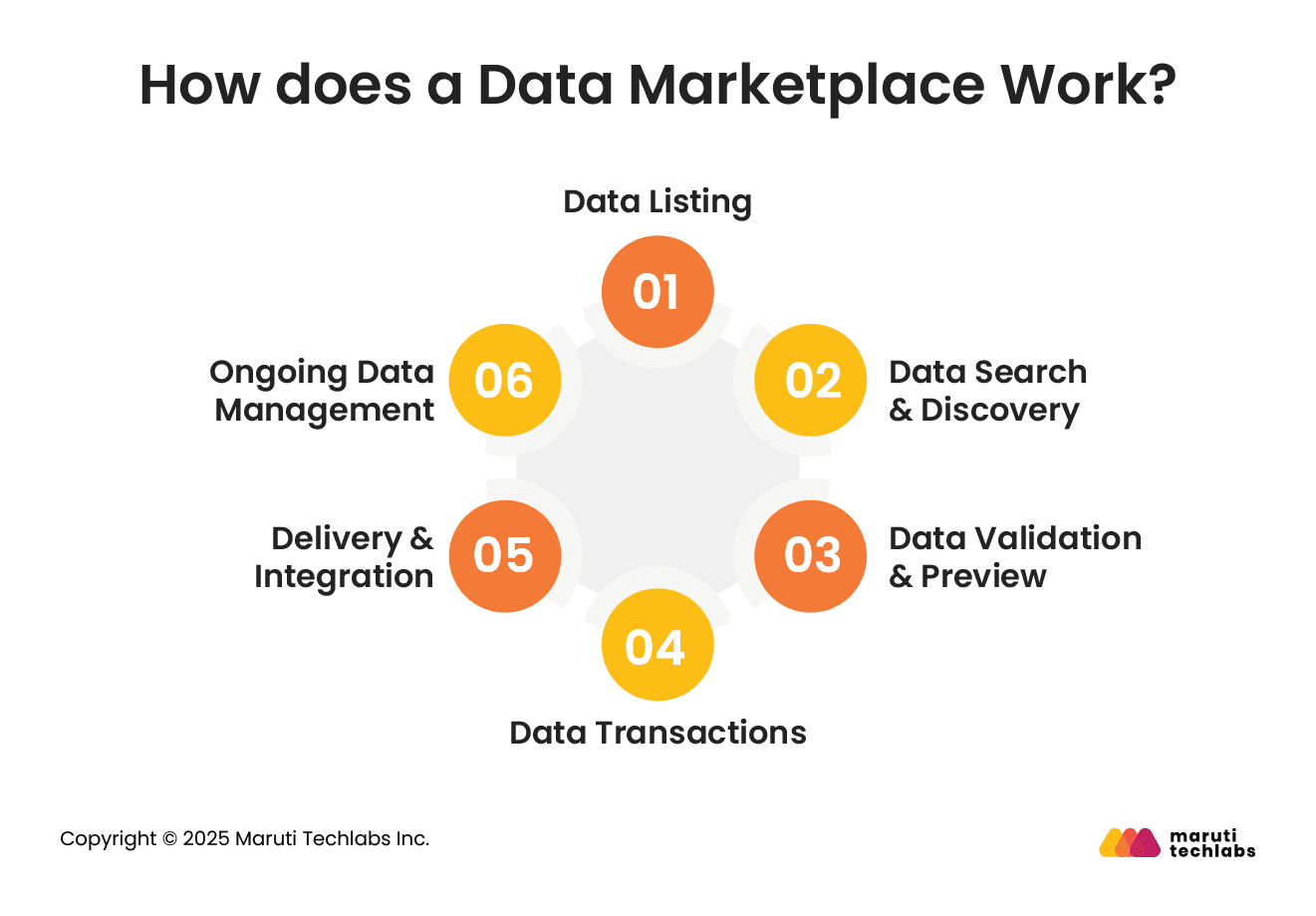
How does a Data Marketplace Work?
A data marketplace functions similarly to an e-commerce platform, but it is specifically designed to trade data. Here’s how it functions.
1. Data Listing
Sellers enlist their datasets in the marketplace, using metadata to describe the content, format, and use cases. The dataset is then made discoverable by categorizing it based on industry, data type, and licensing terms.
2. Data Search & Discovery
Buyers use tools and filters to find the required datasets based on industry or keywords. Many platforms harness AI-based recommendations and ML algorithms to present the most relevant datasets.
3. Data Validation & Preview
Some marketplaces allow buyers to access sample preview datasets to test the data quality before buying. Many of them also certify and validate data to ensure reliability.
4. Data Transactions
When purchasing data, buyers adhere to licensing terms. They can be paid via one-time purchases, pay-per-use, or subscriptions. Some marketplaces automate and secure transactions using blockchain contracts.
5. Delivery & Integration
Data can be seamlessly integrated into buyers' existing systems and delivered through cloud-based platforms, direct downloads, or APIs. Some marketplaces add convenience by incorporating data directly into business workflows using automated data ingestion and processing tools.
6. Ongoing Data Management
Buyers can subscribe to data updates to ensure they have the latest information. Some platforms provide automated alerts, real-time data streaming, and AI-powered analytics to offer businesses a competitive advantage.
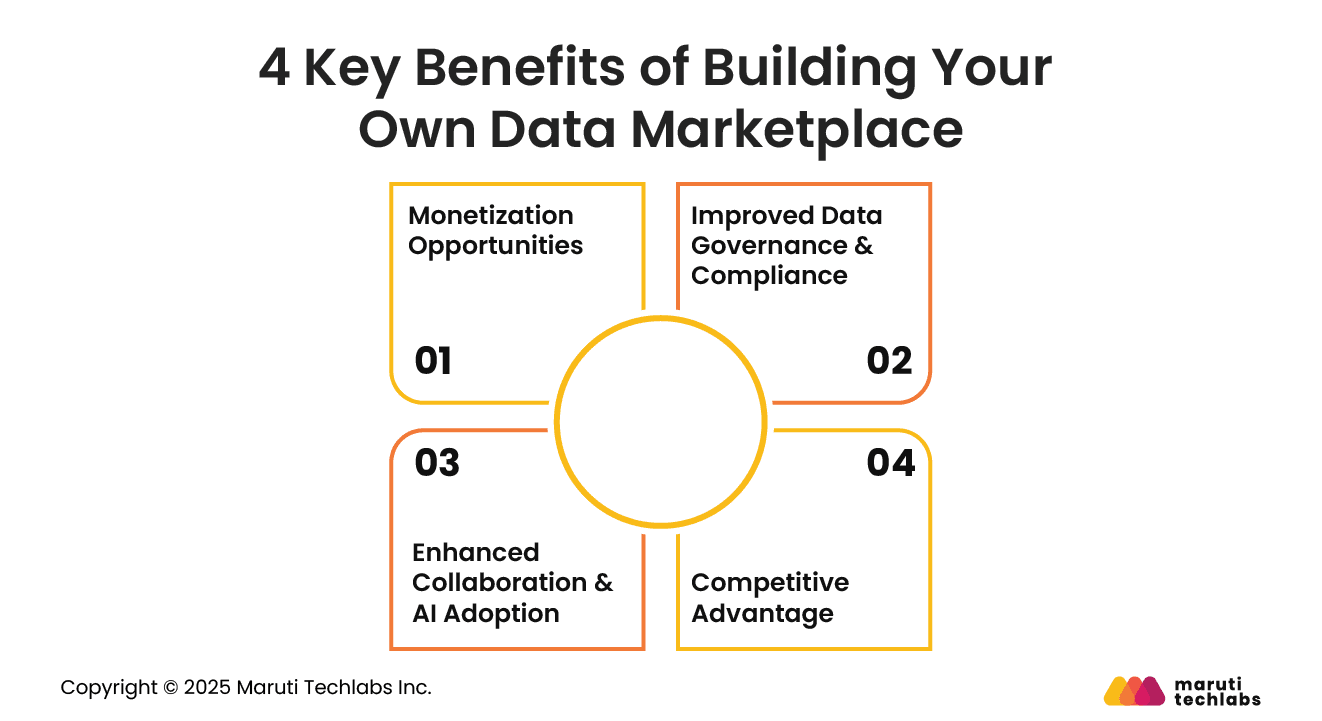
4 Key Benefits of Building Your Own Data Marketplace
Building your own data marketplace enables organizations to securely share, discover, and monetize data assets internally and externally, transforming raw information into governed, scalable products that drive innovation value outcomes.
1. Monetization Opportunities
An internal or external data marketplace unlocks multiple monetization models, including data subscriptions, usage-based pricing, premium analytics, and partner exchanges.
Organizations can commercialize proprietary insights, reduce data silos, and create new revenue streams while maintaining control, transparency, and pricing flexibility across consumers, partners, and ecosystems globally, securely, sustainably, efficiently, and strategically.
2. Improved Data Governance & Compliance
A centralized data marketplace strengthens governance by standardizing access controls, lineage, metadata, and quality policies.
It enforces regulatory compliance with GDPR, HIPAA, and industry mandates through auditability, role-based permissions, and automated policy enforcement, reducing risk, improving trust, and ensuring consistent data usage across teams and business units organization-wide, securely and reliably.
3. Enhanced Collaboration & AI Adoption
Data marketplaces break down organizational silos by enabling self-service discovery and secure cross-domain sharing. Engineers, analysts, and data scientists collaborate using trusted datasets to accelerate AI and machine learning initiatives.
It improves model performance, reducing duplication and enabling faster experimentation, innovation, and data-driven decision-making at scale, enterprise-wide, continuously, efficiently, collaboratively, and globally.
4. Competitive Advantage
Owning a data marketplace differentiates organizations by turning data into reusable products that competitors cannot easily replicate. Faster insights, stronger governance, and scalable sharing improve agility, customer experiences, and partner ecosystems.
This capability supports innovation leadership, informed strategy, and sustainable long-term advantage in increasingly data-driven markets globally, competitively, securely, efficiently, and consistently.
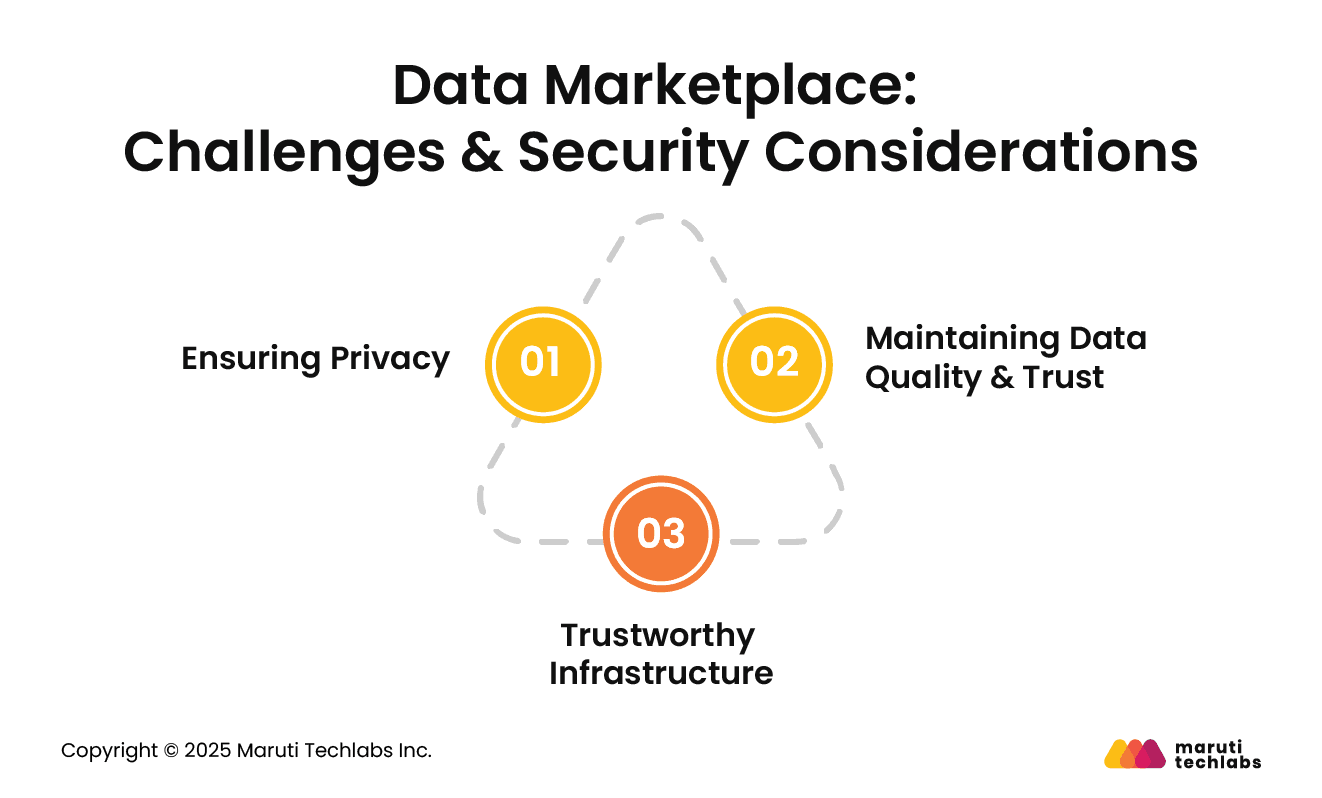
Data Marketplace: Challenges & Security Considerations
Data marketplaces offer great convenience and flexibility. However, they must deal with confidential information, so privacy and security are of the utmost importance. Here are some prominent challenges organizations face when establishing a data marketplace.
1. Ensuring Privacy
Marketplaces must implement rigorous privacy policies to safeguard the sensitive information in the datasets. Maintaining overall privacy demands that marketplaces comply with data transmission protocols, data protection regulations, and anonymization techniques.
2. Maintaining Data Quality & Trust
Implementing essential mechanisms to authenticate the quality of datasets is imperative. This includes leveraging reputation systems to instill trust between data providers and consumers, transparency in data provenance, and data validation.
3. Trustworthy Infrastructure
The marketplace’s all-around security should be intact. This includes investing in timely security audits, authentication, and access controls, data encryption at rest and in transit, and protection against cyber attacks.
Tools and Platforms to Consider When Developing a Data Marketplace in 2026
1. AWS Data Exchange
AWS Data Exchange is a cloud-native service enabling organizations to publish, discover, and subscribe to third-party or internal datasets on AWS.
It integrates with S3, Redshift, and Lake Formation, simplifying data sharing, governance, billing, and access management while supporting scalable, secure, marketplace-style data distribution across industries, use cases, globally, and efficiently.
2. Azure Data Share
Azure Data Share enables organizations to securely share data with internal teams or external partners without duplicating effort.
It supports snapshot and incremental sharing across Azure services, including Data Lake and Synapse, while providing centralized governance, monitoring, and access controls to ensure compliant, reliable, and efficient data collaboration enterprise-wide, scalable, and consistent.
3. Google Cloud BigQuery
Google Cloud BigQuery enables large-scale data sharing and analytics through secure views, authorized datasets, and cross-project access.
Organizations can build data marketplaces directly on BigQuery, leveraging serverless scalability, strong performance, integrated governance, and seamless integration with Google Cloud AI, BI, and data engineering services globally, securely, efficiently, collaboratively, reliably, and consistently.
4. Snowflake Marketplace
Snowflake Marketplace allows organizations to share and monetize live data without copying or moving it.
Built on Snowflake’s secure data cloud, it supports real-time access, granular governance, usage tracking, and billing. Providers and consumers benefit from simplified onboarding, scalability, and trusted, governed data products, enterprise-ready, globally, efficiently, securely, consistently, and sustainably.
5. Databricks
Databricks enables data marketplaces through its Lakehouse Platform, combining data engineering, analytics, and machine learning.
Organizations can securely share Delta tables, apply fine-grained access controls, and support collaborative AI development. Integrated governance, lineage, and performance optimization make Databricks suitable for large-scale, analytics-driven data sharing across enterprises, globally, efficiently, securely, and consistently.
6. Informatica
Informatica provides enterprise-grade data management capabilities supporting data marketplaces through strong metadata management, data quality, and governance.
Its tools enable cataloging, lineage, policy enforcement, and integration across hybrid environments. Informatica helps organizations operationalize trusted data products while meeting compliance requirements and complex enterprise data management needs globally, securely, efficiently, and consistently.
7. Open-source frameworks for building marketplaces
Open-source frameworks such as Apache Atlas, Amundsen, DataHub, CKAN, and Superset support the development of custom data marketplaces. They provide metadata management, discovery, governance, and visualization capabilities. Combined with cloud storage and security tools, open-source approaches offer flexibility, cost efficiency, and extensibility for tailored marketplace implementations across industries, teams, and use cases globally.
Top 4 Best Practices for Building a Successful Data Marketplace in 2026
Building a thriving data marketplace requires more than technology alone. Transparent governance, strong quality standards, security, and user-centric design ensure adoption, trust, and long-term value creation from shared data assets.
1. Ensure Strong Data Quality & Metadata Management
High-quality data is foundational to marketplace success. Establish standardized validation, profiling, and cleansing processes, supported by comprehensive metadata, lineage, and ownership information.
Accurate catalogs improve discoverability, trust, and reuse, enabling consumers to confidently select datasets while reducing errors, rework, and downstream analytics risks enterprise-wide, consistent, governed, reliable, scalable, sustainable, and measurable.
2. Implement Robust Security & Privacy Controls
Security and privacy must be embedded by design. Apply encryption, role-based access controls, data masking, and monitoring to protect sensitive data. Align controls with regulatory requirements and internal policies.
Regular audits, automated enforcement, and least-privilege access minimize exposure, maintain compliance, and build confidence among data providers and consumers enterprise-wide, consistently, and at scale and in a resilient manner.
3. Focus on User Experience & Ease of Access
A thriving marketplace prioritizes an intuitive user experience. Provide simple search, clear descriptions, previews, and self-service access workflows. Minimize friction for onboarding and consumption while maintaining governance.
Well-designed interfaces increase adoption, reduce support overhead, and empower users to derive value quickly from enterprise-wide, consistently, securely, efficiently, intuitively, and reliably available data products.
4. Monitor Usage & Continuously Optimize
Continuous monitoring ensures marketplace relevance and performance. Track usage, consumption patterns, quality issues, and costs to identify opportunities for improvement.
Use feedback loops and analytics to refine datasets, pricing, access models, and experiences. Ongoing optimization maximizes value, adoption, and return on data investments over time, enterprise-wide, strategic, scalable, measurable, sustainable, and continuous.
5 Popular Data Marketplaces You Should Know
Here are the top 5 data marketplaces you should know.
1. AWS Data Exchange
AWS Data Exchange facilitates the secure publishing and monetization of data products for providers. It makes data search, subscription, and use for application and analytics easy for data consumers.
2. Microsoft Azure Marketplace
Azure Marketplace offers many data products, including APIs, datasets, and ML models. It promotes data discovery that can be merged with Azure-based applications and workflows.
3. Google Cloud Public Datasets
Google Cloud Public Datasets is a dynamic data marketplace offering various public datasets for analysis. The platform encourages users to implement big data analytics and ML workloads across multiple industries and disciplines without the complexities of data movement.
4. Snowflake Data Marketplace
Snowflake Data Marketplace makes ready-to-query, live datasets accessible from providers across numerous industries. It promotes using a diverse range of data without data copying or movement, offering consumers an efficient solution.
5. Kaggle Datasets
Kaggle, a data science and ML competition platform, has a dataset repository where users can explore and download different datasets shared by the community.
Conclusion
Marketplaces enable secure, compliant, and efficient data sharing, both within organizations and across external partners, encouraging collaboration across teams and industries. They offer benefits such as improved data discoverability, cost savings through reduced data silos, faster access to quality datasets, and the opportunity to generate new revenue streams through data monetization.
However, organizations must weigh these benefits against specific considerations, including data governance, compliance with data privacy regulations, and the technological complexity of marketplace implementation. Choosing the right architecture, access controls, and data cataloging approach is critical for long-term success.
Strategic planning is crucial for enterprises evaluating or building a data marketplace. Start with a simple plan, adopt a phased implementation, train your stakeholders, and implement customer feedback.
How MTL Can Help?
Maruti Techlabs brings deep expertise in data engineering and modern data stack implementation. From building ingestion pipelines and managing metadata to implementing access controls and monetization models, MTL ensures your marketplace delivers value while aligning with compliance and business objectives.
Get in touch with us today to build a future-ready data marketplace tailored to your needs.
Frequently Asked Questions
1. Is Snowflake a data marketplace?
Snowflake is a cloud data platform that includes the Snowflake Marketplace. It enables users to securely discover, share, and access live, ready-to-query data from third-party providers.
2. How to build a data marketplace?
To build a data marketplace, define data sources, ensure governance and compliance, set up secure access controls, integrate cataloging tools, and use cloud infrastructure for scalable data sharing and monetization.
3. What is the difference between a data catalog and a data marketplace?
A data catalog helps users find and manage internal data assets. In contrast, a data marketplace enables buying, selling, and sharing data—internally or externally—often with monetization and access controls.
4. What is an example of a data marketplace?
AWS Data Exchange is a marketplace where users can subscribe to third-party datasets from various industries, enabling seamless data access directly into their analytics and data platforms.
Pinakin Ariwala has over 20 years of experience in AI/ML, data engineering, and software development. He has led AI and machine learning projects across industries, including agriculture, finance, and healthcare, and has been featured on the Clutch Leaders Matrix podcast discussing real-world AI/ML applications.
Stuck with a Tech Hurdle?
We fix, build, and optimize. The first consultation is on us!